Finding a PCP Who Works for You
Finding a new primary care provider can feel surprisingly personal. This is the person you’ll likely see when you’re sick, when you’re well, and at [...]
Read More

If you just want the highlights:
Different letters after the name, same goal for your care.
Despite the name, advanced practice providers aren’t assistants, trainees, or stand‑ins. They’re licensed clinicians who’ve completed advanced education and clinical training beyond a bachelor’s degree.
In primary care, APPs can:
In other words, they provide the same core medical care you expect from your primary care team; because they are part of that team.
APPs work closely with physicians and other healthcare professionals to make sure care is timely, coordinated, and consistent. In many practices, you may see an APP for:
These visits follow the same standards of care and documentation as physician visits and are part of the shared medical record.
The benefit is simple: more access to care, without compromising quality.
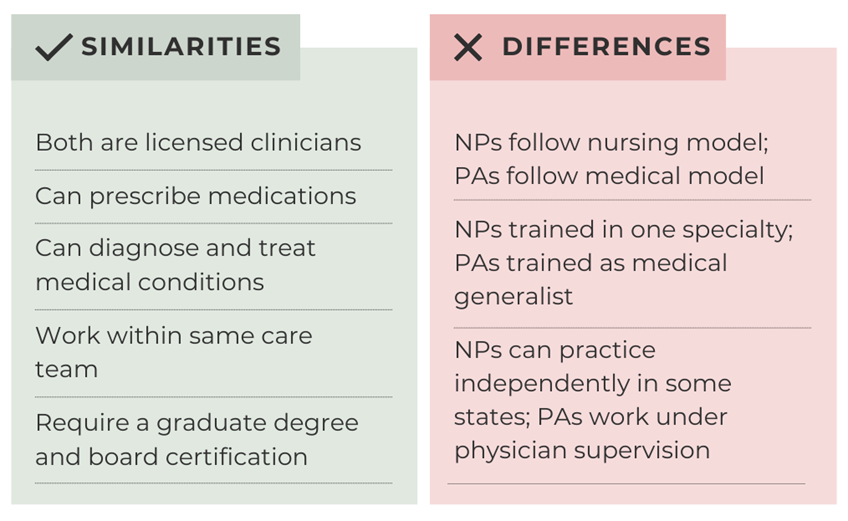
Physician assistants, or PAs, complete a rigorous graduate level education based on the medical school model. Their training includes classroom instruction and extensive clinical rotations across multiple specialties, including family medicine and internal medicine.
PAs are trained to think broadly, which makes them especially helpful when symptoms don’t fit neatly into one box. They work as part of a physician led team and consult with physicians as needed. That collaboration helps ensure care stays thorough and thoughtful, not rushed or fragmented.
Nurse practitioners, or NPs, are advanced practice registered nurses who complete graduate level education focused on patient centered care and health promotion. Their training builds on a nursing foundation and places a strong emphasis on prevention, education, and long-term health.
NPs often shine in ongoing care, especially when managing conditions that need steady follow‑up rather than quick fixes. Like PAs, NPs work closely with physicians and the rest of the care team. Care decisions are shared, communication stays open, and patients benefit from a coordinated approach instead of a series of disconnected visits.
Both PAs and NPs are advanced practice providers, but their training paths are different.
In day‑to‑day practice, most patients notice very little difference in the care they receive. Both PAs and NPs are:
The goal is the same either way: good care, delivered by a team that knows you.
Advanced practice providers help primary care practices offer more timely appointments and reduce wait times. By sharing responsibility for routine, preventive, and follow‑up care, APPs help practices meet patient demand more effectively.
For patients, that often means:
Because APPs work within the same medical record system as physicians, care stays coordinated and consistent. Communication among team members helps ensure treatment plans align and follow‑up happens as it should.
Scheduling with an APP doesn’t mean you’re getting second‑tier care. It usually means you’re getting care sooner, from someone who’s part of the same team.
If a visit requires physician involvement, the care team works together to make sure you receive the appropriate level of care. No one is left guessing, and nothing important gets overlooked. In modern primary care, good care isn’t about titles. It’s about teamwork, communication, and making sure you’re supported at every visit.
Advanced practice providers are a big part of that support, and once you’ve seen one, they tend to feel less like a mystery and more like what they are, another trusted member of your care team.
Finding a new primary care provider can feel surprisingly personal. This is the person you’ll likely see when you’re sick, when you’re well, and at [...]
Read MoreMost people see a doctor when something hurts. An annual wellness visit is for the times when everything feels fine. Annual wellness visits help you [...]
Read More